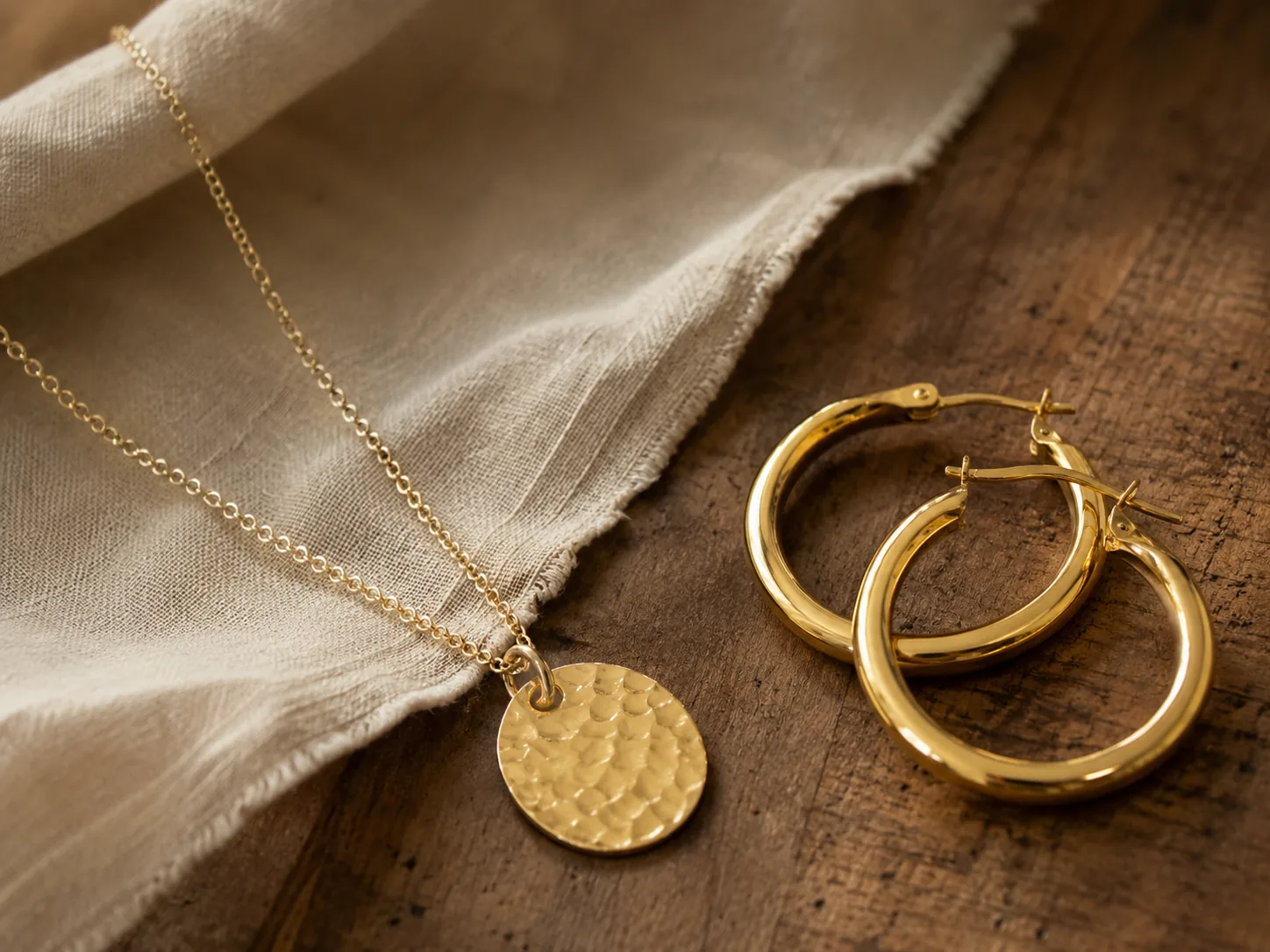
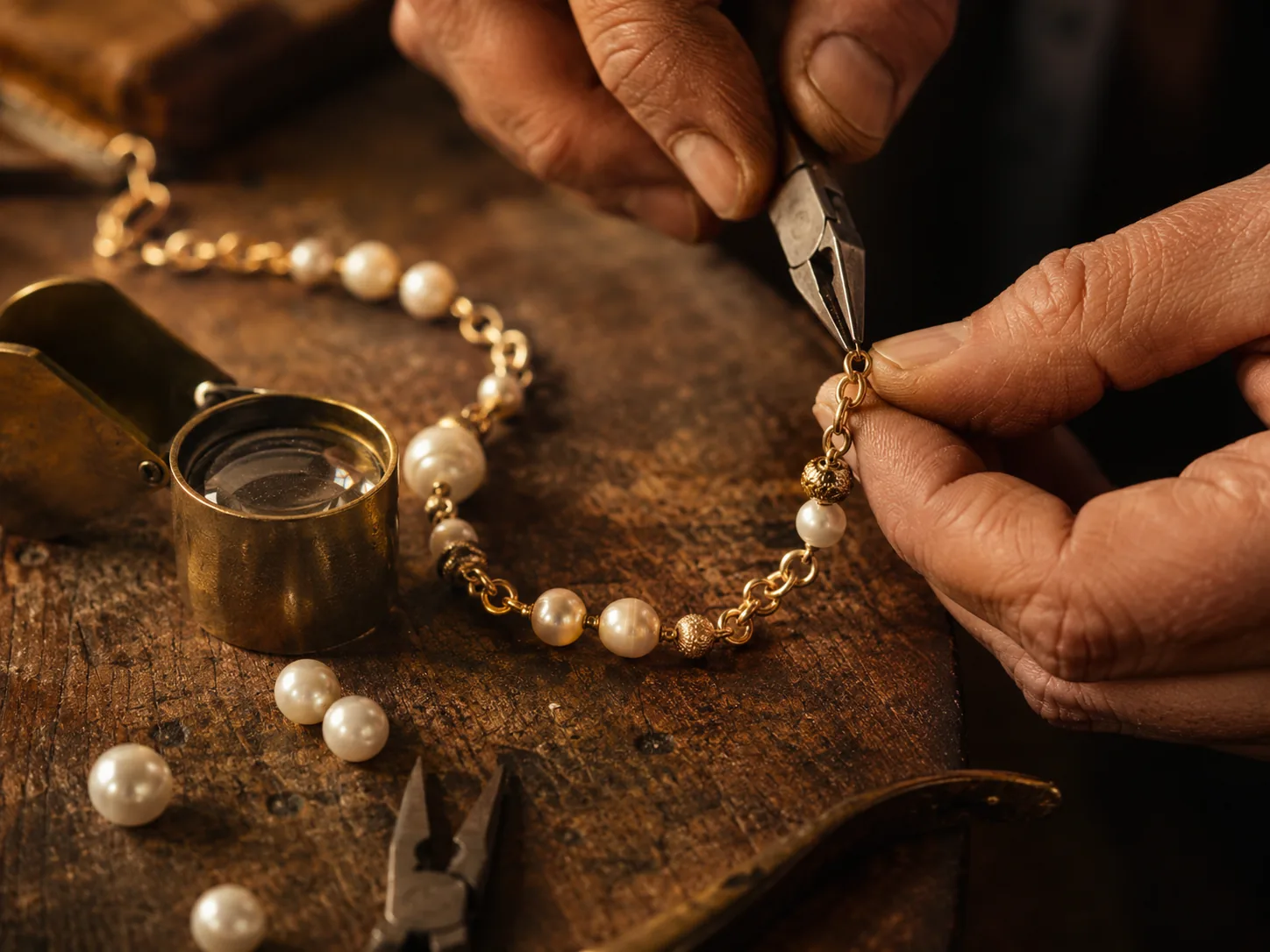
“Handmade”: on paper, anyone can write it. In reality, a piece shaped by an artisan’s hand carries signs that nothing can imitate. Here is how to recognise them — wherever you shop, not only with us.
1. Irregularity, the signature of the living
No two handmade pieces are ever perfectly identical. The slightest variation in a curve, a stitch, a shade of enamel: these are not flaws, they are proof. A machine repeats; a hand interprets.
Look closely at a seam, a setting, an enamel: you will find micro-variations, a stitch drawn a little tighter, a colour that shifts slightly. On an industrial object, everything is cloned identically, with a cold perfection. On an artisan’s piece, these tiny departures tell of the hand that held it.
2. Materials that are named, not implied
An honest atelier tells you what it works with: the nature of the metal, the origin of the leather, the type of wax or clay. When the provenance stays vague, it is rarely by chance.
“Gold-tone metal”, “natural stone” or “genuine leather” with no further detail say a great deal by what they leave out. An artisan who stands by their work names things: gilding, vermeil or gold-filled for jewellery — we have in fact devoted a whole guide to these three gold finishes.
3. A craft with a name and a face
Behind a true creation, there is someone — an atelier you can name, a know-how you can describe. If no one stands behind the piece, it was not made by hands.
4. Time, fully owned
Handmade takes time, and a good artisan does not hide it. A mass-produced piece does not have the same value as one assembled individually, in a limited edition.
A stated making time is not a failing in service: it is the sign that the piece is genuinely made by hand, one at a time or in very small numbers. Immediate, unlimited availability is the mark of mass production.
5. Weight and hidden finishes
A handmade piece is also judged by hand, quite literally. The weight of a piece of jewellery in dense metal, the solidity of a candle poured in solid wax, the neatness of a lining or a hem: hidden finishes betray the level of care. Turn the object over and look at the reverse — that is often where the truth is written.
6. False promises to watch for
A few signals should raise concern: prices in line with mass retail for a claimed “handmade” piece, endless stock, perfectly duplicated photographs, or no information whatsoever about the atelier. True handmade has a cost, a story and limits — and it is not afraid to show them.
What the Maison looks for
These are the signs we look for before offering a piece: clean embroidery, a well-set bead, a material with body. Some pieces are assembled and finished in our atelier, others come from artisans we work with directly; most exist as a single piece only. Discover our handmade jewellery, our handmade candles and the whole shop.