Search for Kabyle jewellery and you will find two things with different uses: traditional jewellery in enamelled silver and coral, and modern ceremony sets in gold tones and beads. Both have their place. This guide explains what sets them apart, how to recognise a fine piece, and how to wear them together.
What traditional Kabyle jewellery is
Traditional Kabyle jewellery comes from the jewellers’ villages of Greater Kabylia, Ath Yenni being the best known. It is made of silver, worked in cloisonné and enamelled in three colours that make it instantly recognisable: yellow, green and blue. Red coral, set as cabochons, adds a fourth. The forms are codified: the fibula (tabzimt) that fastens the dress, wide bracelets, necklaces hung with pendants, diadems, heavy earrings. These are dowry pieces, handed down through the generations, worn with the Kabyle dress and kept for a lifetime.
What a modern ceremony set is
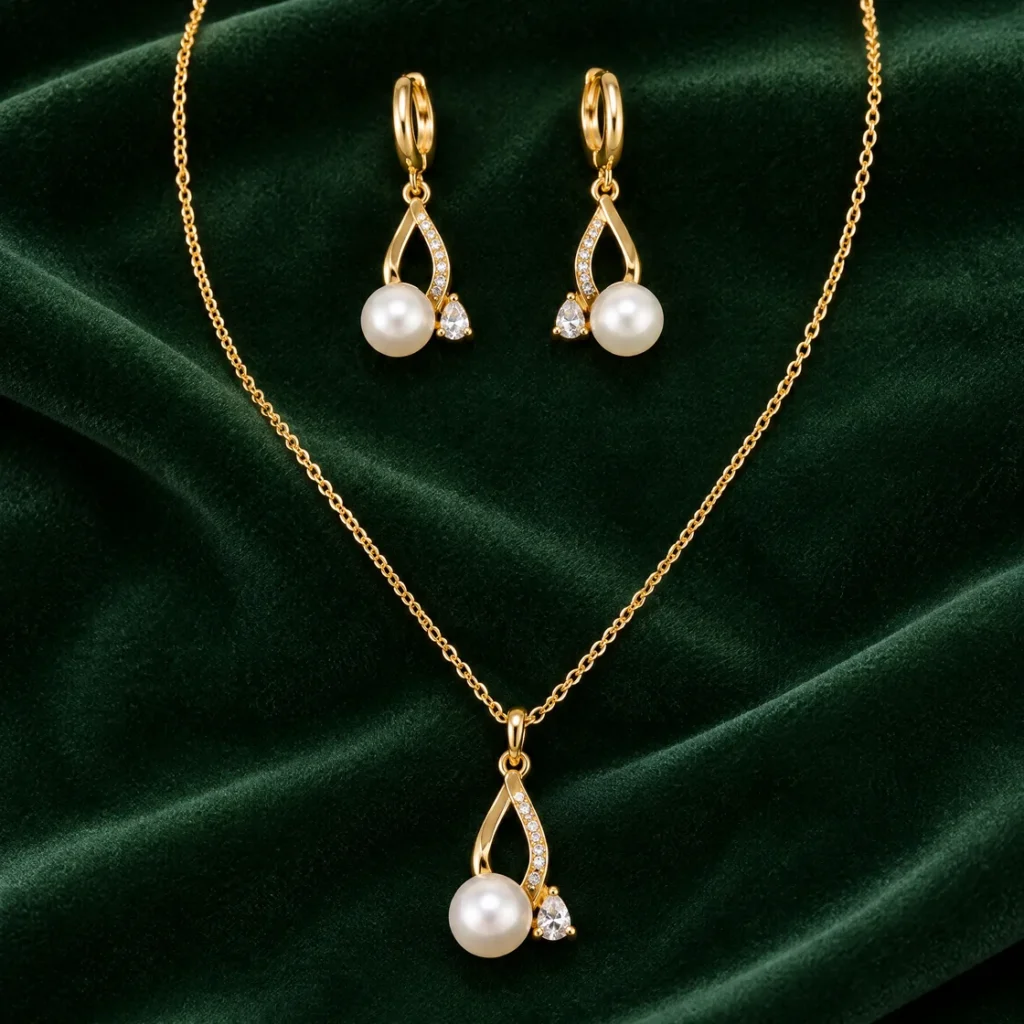
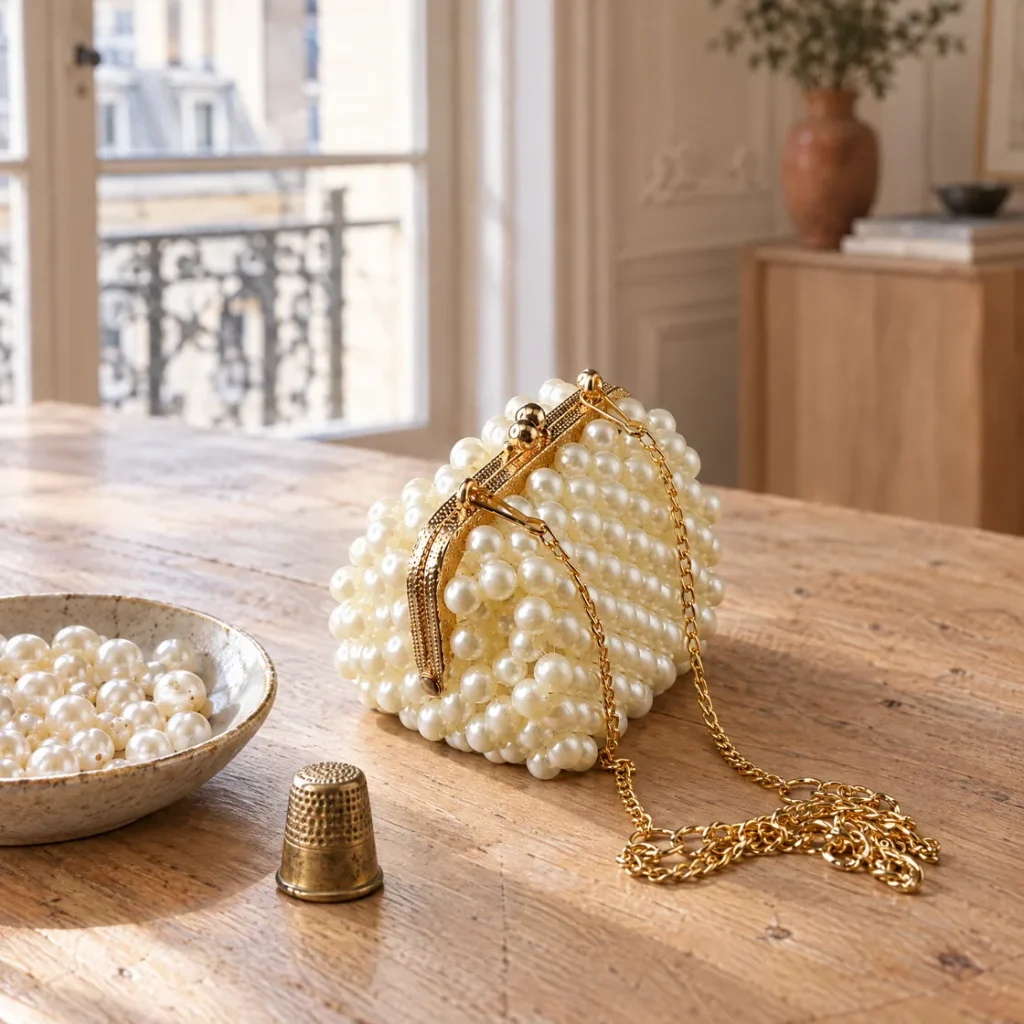
A modern set keeps the spirit of the full set (necklace, earrings, bracelet, sometimes a belt) in today’s materials: cultured pearls, gold-tone medallions, crystals, coloured enamel, coloured stones. It is lighter, it can be worn with a modern Kabyle dress as well as an evening dress, and it costs less than an antique piece in solid silver. This is what our atelier in Paris makes, one piece at a time: browse our ceremony jewellery sets.
How to recognise a fine traditional piece
- The hallmark : silver jewellery carries a hallmark; its absence is not a deal-breaker on an antique piece, but it means having the metal tested.
- The enamel : the colours should be vitrified and slightly domed, with no paint flaking off.
- The coral : real coral is matt, finely veined and never perfectly even; plastic is shiny and too regular.
- The workmanship : twisted silver wire, granulation, crisp cloisons. A piece cast in a single pour is not Kabyle jewellery-making.
For an antique piece, go to a specialist jeweller or a family of jewellers; we do not sell antique silver.
How to recognise a good modern set
- The materials are named: cultured pearls, crystals, jade, turquoise, citrine, gold-tone metal, stainless steel. Be wary of product pages that say nothing.
- It is assembled by hand, one at a time: you can see the knots, the closed jump rings and the sturdy clasps.
- The weight is comfortable for a whole evening; drop earrings stay light.
- A guide explains the gold terms: read vermeil, gold-filled or gilding before you buy.
Wearing them together
Nothing stops you from mixing them: an antique fibula on a Kabyle-style velvet waistcoat, and a modern set in beads and gold-tone medallions around the neck. The rule is one statement piece per level: the fibula on the waistcoat, the necklace at the neckline, light earrings. At a wedding, the bride often wears the family silver for the henna night and a gold-tone set on the day of the celebration.
Which set for which occasion
- Wedding : grand ceremony set in beads and gold-tone medallions, plus a ceremony belt.
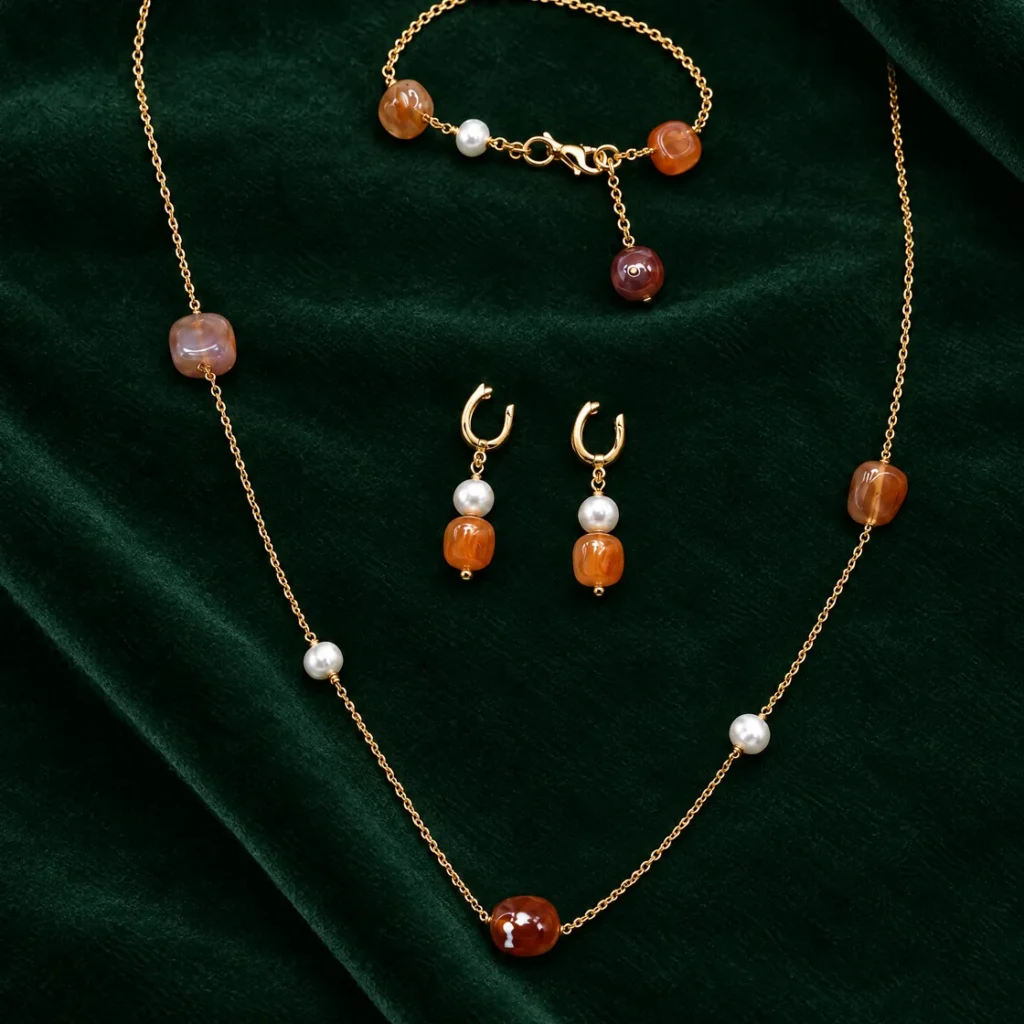
- Henna night : warm shades, amber-tone stones and cultured pearls.
- Guest : jade set, turquoise or citrine-tone, or a bead and crystal choker.
- Yennayer : a necklace of beads and medallions over the waistcoat.
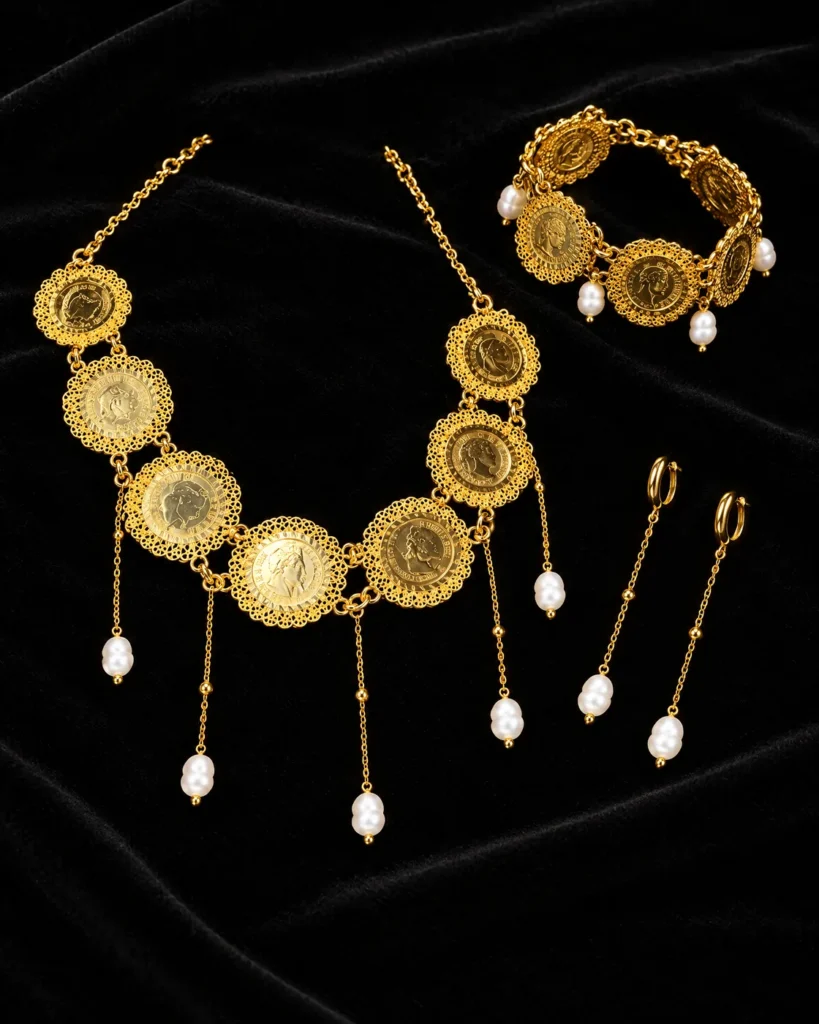
Ceremony jewellery sets
Grand ceremony set in beads & gold-tone medallions — bib necklace, bracelet & earrings
€99.00One of a kind

Ceremony jewellery sets
Amber-tone stone & cultured pearl set — long necklace, bracelet & earrings
€95.00One of a kind
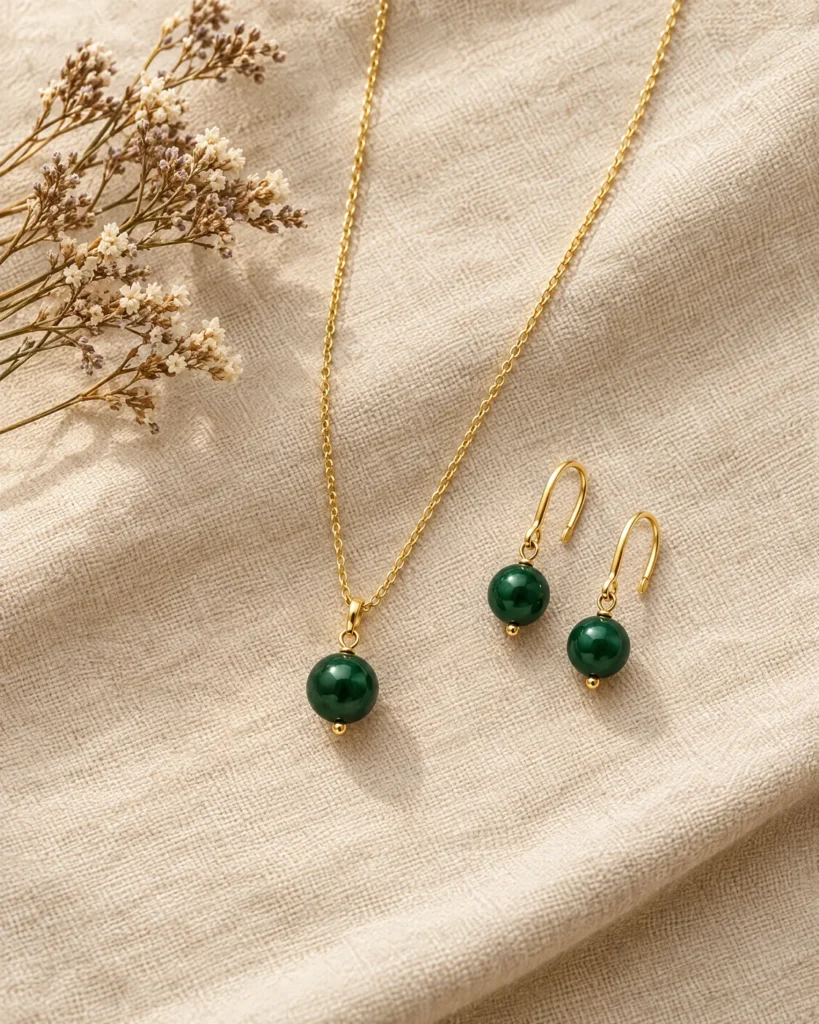
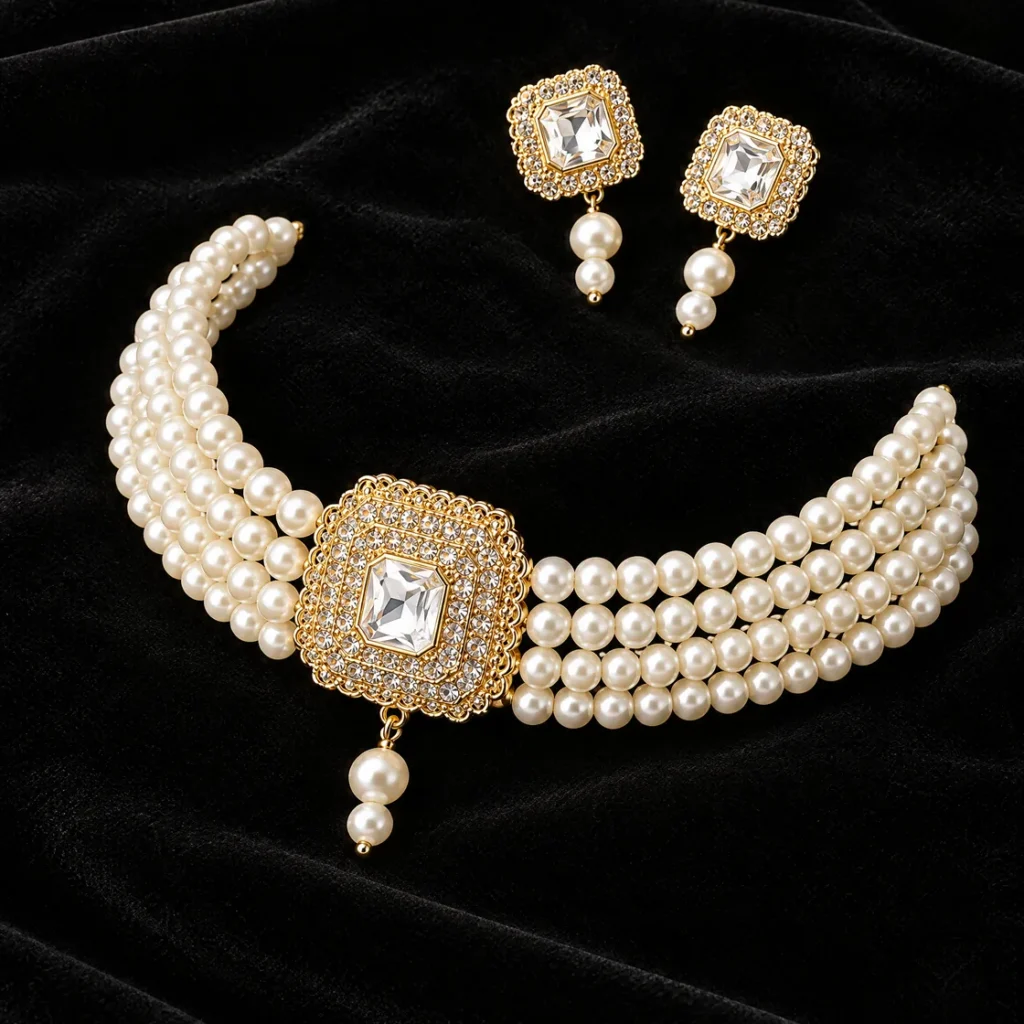
Ceremony jewellery sets
Four-row choker in pearlescent beads & square crystal — with matching earrings
€79.00One of a kind
To put the whole outfit together, read our guide to North African ceremony outfits.
Frequently asked questions
Is Kabyle jewellery always silver?
Traditional pieces, yes: enamelled silver with coral. Modern sets are made of gold-tone metal, beads and stones: they do not claim to be silver.
Can you wear a modern set with a Kabyle dress?
Yes, and today it’s the most common choice for guests: the dress brings the colour, the gold-tone beaded set brings the light.
How much does a handmade ceremony set cost?
Ours range from €69 to €119, assembled in Paris, with complimentary delivery from €49.